
Chen Taijiquan Book Release Notes
From Teaching Notes to a Book: Making a Complex Art More Accessible
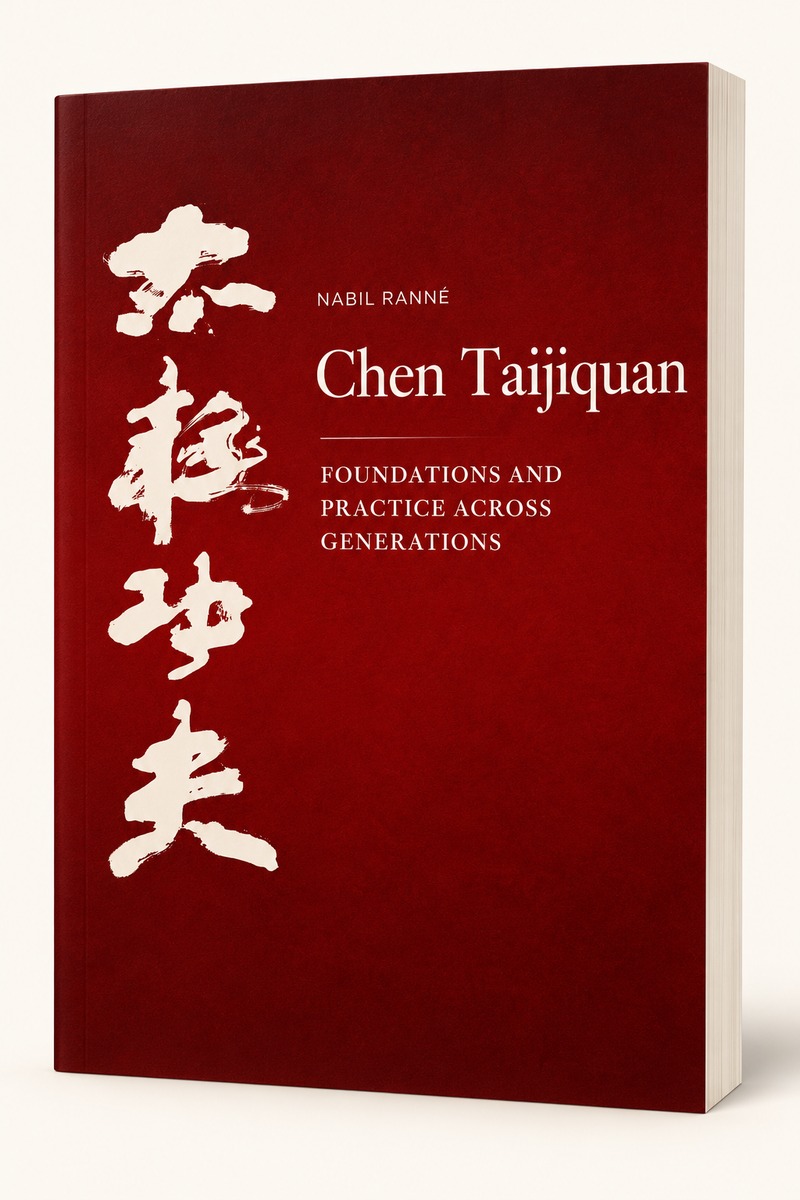
My book, Chen Taijiquan – Foundations and Practice Across Generations, began with material I wrote for my students. Over time, it grew into a practical guide for a wider readership.
Ten years of notes
Alongside practising Taijiquan, I have always had an intellectual and cultural interest in the art. I read a great deal, and at some point it felt natural to start writing too. As I began teaching, I put together material that could help my students understand and revisit what we were working on.
During the pandemic, when I could no longer teach as much, I sat down to organise what I had written over roughly ten years. I pasted everything into one document. I cannot remember the exact number, but it was already around a hundred pages. As I began explaining the curriculum and developing its individual topics, I realised this was going to become a book.
Giving each idea a place
Teaching the form is very practical, as it should be. But there is a great deal of thought underlying the practice. Terms such as jìn (劲), or trained force, and chánsī (缠丝), silk reeling, need explanation. A brief discussion in class does not always give students enough time to absorb them, and I cannot expect everyone to do as much reading and research as I do.
I wanted to give these ideas a clear structure so students could retain them and see how they relate to one another. I organised the curriculum around cultivation and application: basic requirements, connections, movement methods and internal work on the cultivation side; topography, strategies and concepts on the application side. Whatever we were working on could then find a place within a larger picture.
I wanted to preserve the complexity of the art while making the learning experience more accessible through a clear structure.
A bridge across generations and languages
In a way, I see teaching as being a bridge: between my teacher, Chen Yu, and my students, between generations, and between languages. There are many excellent Chinese books on Chen-Style Taijiquan. For practitioners who cannot read Chinese, much of that material is difficult to access.
So I see my contribution as primarily one of structure, translation and explanation. The substance comes from the art I have learned and the Chinese sources I value deeply. I want to remain faithful to those sources while helping people from different backgrounds find their way into the practice.
This also means keeping its different aspects connected. In the art I learned, physical movement and internal or energetic work belong together. Internal and external practice need to become integrated.
In that spirit, the credit belongs to my teacher and the generations before him; any mistakes in my presentation are my own.
A companion to practice
The book began with my own students in mind, but I hope it will also be useful to others exploring Chen-Style Taijiquan. It offers a place to return to an explanation, connect it with your own experience, and bring a clearer question back to your next lesson.
For those practising with us at CTN Academy, it is a companion to what we do in class. For readers elsewhere, I hope it offers an accessible way into the material and a small contribution to the continuing transmission of the art.
See you in class,
Nabil
A look inside the book
Take a closer look at the contents and how the book is organised.
Inside the book
Clicking below loads the video from Vimeo and connects your browser to Vimeo.
Or watch on VimeoWhat readers say
“I have been training Taiji for almost 20 years and this book clarifies and organizes so many of the principles...”
“…the methods of practice, why we practice and most importantly how we integrate these ideas into cohesive and comprehensive system of martial arts, health and mind.”
“It covers a complete cross section of the art from philosophical concepts, body requirements and how to apply this to your practice.”
“I personally like how comprehensive the book is with a good blend of descriptions, illustrations and diagrams which in my opinion make it an essential tool in learning all the facets of Chen Taijiquan.”
“Nabil’s book brings years of dedication and practice to life.”
“He writes in a clear, approachable, and accessible way, offering a comprehensive understanding of his teachings and how to incorporate them into your own practice.”